

Address: Perth, WA
Email: hello@avenuegroupaus.com.au
Phone: 0400-082-072

Blog
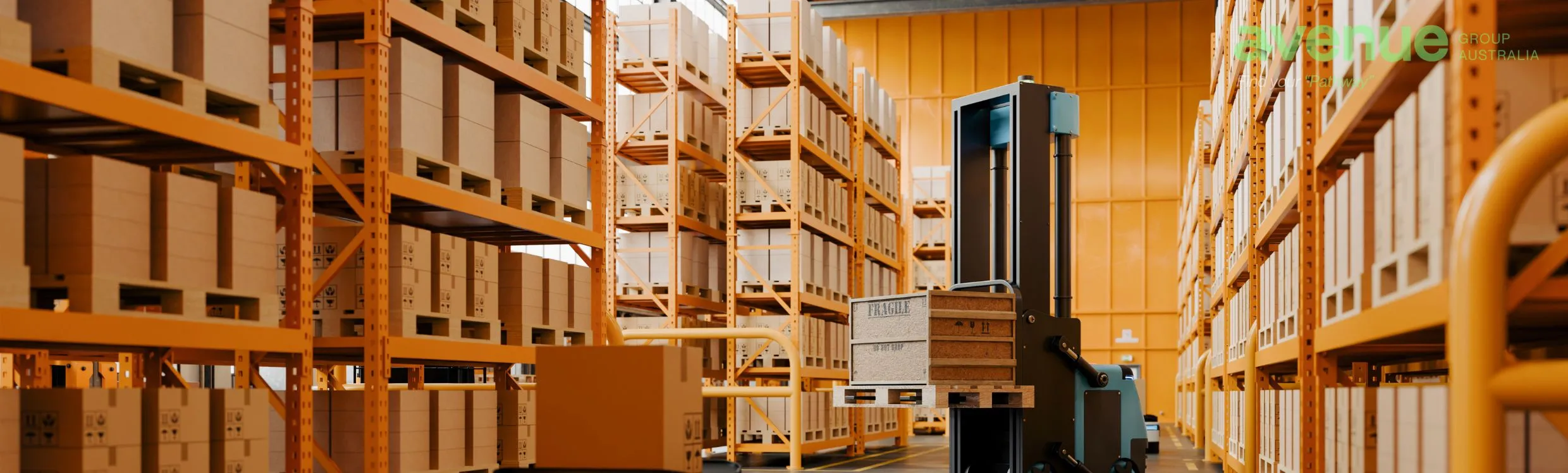
If you map the evolution of the logistics industry over the past decade, you will see a drastic advancement. The traditional logistics industry was reliant on manual processes for paper documentation, managing warehouse inventory, resolving issues like delivery delays or damages, etc. Logistics in the supply chain started getting more complex as the online retail operations started to pick up.
Manual-led processes became a major challenge because of increased chances of errors, delays, high operational costs, and reduced customer satisfaction. Digital transformation emerged as a solution for the logistics industry, with AI agents taking charge.
The logistics industry now has access to real-time business information that has changed the landscape of the global supply chain to a great extent. These intelligent AI solutions enhance inventory management, route optimisation, demand forecasting, and every aspect of supply chain management. As a result, AI development companies like Avenue Group Australia are experiencing growing demand for customised AI solutions.
First things first, what are AI agents?
AI agents are intelligent solutions that are designed to automatically collect and analyse data and make decisions that ensure the effective attainment of predefined goals. The decisions are taken based on data-driven insights, thereby ensuring better outcomes.
These AI agents collect data using sensors and IoT devices and then process it using advanced technologies like machine learning (ML) and natural language processing (NLP). By automating repetitive tasks and operating autonomously, these intelligent agents have become key drivers in shaping future technological revolutions.
Let's crunch a few numbers:
The AI in logistics market size is expected to reach $38.68 billion by the end of 2026.
The global artificial intelligence in the supply chain market is projected to be valued at USD 51.12 billion by 2030.
29% of the surveyed companies reported reduced delivery delays with AI agents in logistics.
Traditional automation follows rule-based logic. In layman's terms, if ‘this’ happens, then you do ‘that’. Here, ‘this’ and ‘that’ are pre-programmed, which means traditional automation works well for ordinary or planned scenarios.
But the logistics business, as we all know, doesn’t follow a rule of thumb. Several factors, such as natural calamities, sudden shifts in demand, and other surprises, can change at any moment. In such unexpected scenarios, the system comes to a halt, waiting for human intervention.
AI agents in logistics dynamically adapt to real-time conditions. They use rules based on the scenario and adjust the actions accordingly. This is highly beneficial for supply chain operations in the rapidly progressing business context.
(1) AI agents that analyse real-time data such as weather updates, traffic details, and delivery schedules to recommend the most convenient route. Instead of manually planning routes only once a day, AI intelligence figures out the most effective route for drivers at all times.
Some logistics partners also collaborate with an AI development company to design personalised AI solutions that integrate into their existing vehicle tracking systems.
(2) When humans keep track of inventory in an Excel file, a lot of guesswork and time is spent. AI agents in logistics update inventory in real-time, enabling better inventory and demand planning.
(3) By evaluating past sales, AI agents can identify trends in product defects and make suggestions for enhancing quality control. They can also provide a comprehensive summary detailing the root cause and the preventive measures to mitigate it. This helps uphold high-quality benchmarks throughout the supply chain cycle.
(4) With the use of GPS data and IoT devices, AI agents in logistics can fetch real-time updates for the shipment. This transparency improves visibility and accuracy for the logistics team as well as customers.
In response to the technological advancements and the rising prominence of online retail businesses, the adoption of AI agents in logistics and supply chain industry is expanding. This is because of the following benefits of this integration:
Cost-cutting is the top priority for every business. AI agents serve the purpose right by offering smart automation in several aspects of the supply chain process:
AI-powered solutions take care of the monotonous tasks demanding extensive manual labor.
They help decide the shipping route, maintain updated inventory records, and automate the paperwork. All this speeds up the order processing, making it more precise.
Artificial intelligence has given a new angle to demand forecasting. AI agents in logistics can take you back in time and compare that with present-day demand.
By analysing the sales trends, previous demand history, market conditions, weather, and several other factors, AI helps in factual prediction. This also helps to override the issue of over or under stock.
AI agents promote faster deliveries, transparent communication, and prompt response time. This helps improve customer contentment because they can track their order in real-time and receive their shipment updates.
This level of clarity fosters trust in the users because they are being notified each time there is progress in their order status.
In the unforeseen business landscape, businesses need to be well prepared to mitigate possible risks.
AI agents offer a smart approach to risk analysis by scanning data related to weather, natural calamities, traffic congestion, etc. This forecasting helps businesses to finalise backup plans beforehand.
Regardless of how exceptionally well the AI solutions are designed, several challenges arise when it's time to put them into practical use. The same applies to the implementation of AI agents in logistics and supply chain management.
In this section, let’s cover the most common challenges and ways to overcome them, to ensure an effortless implementation.
(1) Logistics businesses deal with sensitive and confidential user information. Each shipment has a customer record that reflects several customer details that need to be safeguarded.
Solution: When implementing AI agents in logistics, data protection has to be your priority. To ensure this, you can have data encryption protocols and Information Security Management Systems (ISMS) with clear policies to minimise data breaches.
(2) AI tools are not everyone’s cup of tea because of their complexity of use. This is why a lot of the time, there can be employee resistance to adopting these AI agents in logistics. Additionally, existing teams might lack the required education to use these tools to the best advantage.
Solution: Begin by honestly communicating the value of this integration to your team to boost their morale and acceptance. To address the skills gap, provide training, conduct workshops, and give access to online courses to build their confidence.
Implementing AI agents in logistics can be implemented effectively with proper planning, provided it’s done with careful planning and an action plan. You can use this structured approach that has been tried and tested by reputed AI development companies:
(1) Before implementing anything new, the primary step is to evaluate your needs. This step should ideally begin with an evaluation of your existing supply chain process. Note the exact challenges in your supply chain that need to be addressed with this AI agent integration. This could be anything from delivery speed to cost, visibility, and so on.
Expert advice: Keep your executive and operational team in the loop to identify areas where this AI agent can add value.
(2) Data is the fuel for these AI agents. Collect past and real-time data using IoT devices, sensors, and other credible data sources. Follow a strategic approach to organise this data for minimal discrepancies and accurate insights.
(3) Decide on the right AI technology stack that you think will align with your logistics and supply chain needs. A possible tech stack could be ML for forecasts, NLP for communication, and predictive analytics to plan and manage the workflow.
(4) Heard of pilot projects? It’s time to test the AI agents in the real logistics field. You could begin with a small-scale pilot for a specific area, such as inventory management. Track the performance of the AI agent, figure out what the improvement areas are, and refine the algorithm accordingly. This helps eliminate the risk before the deployment phase.
(5) Once the testing stage has been successfully cleared, it’s time to implement the AI agents across the supply chain. Wait, your job doesn’t end here!
You need to constantly monitor the performance and update the model with the changing market dynamics.
Everything on the internet sounds fascinating, but not until it has been practically tried and tested. We can relate, and that is why we thought these real-world examples of reputed brands might help you make a confident decision:
Implemented multi-agent AI systems across 200+ Australian warehouses to help with real-time prediction of stock requirements and optimising delivery routes.
FedEx utilises an AI agent to plan the delivery route for trucks carrying innumerable packages daily. It provides live updates related to road closures, traffic, weather, etc.
IKEA uses an AI agent to predict the furniture demand across more than 500 stores. The idea is to prevent the challenge of understock or overstock.
Avenue Group Australia is a pioneer in the AI development realm, backed by 32+ years of expertise. They believe that businesses need to go a step further than off-the-shelf AI solutions and customise the solutions based on their specific needs.
Avenue Group is reputed for their robust and superior quality solutions that enhance the lifecycle of your products. Among the innumerable industries that they cater to, logistics and supply chain management are among them. When you choose to partner with their team of experts, they ensure to build and integrate AI agents in logistics using state-of-the-art technologies.
From providing AI chatbot development services in Australia to tailored AI solutions for your logistics business, their AI capabilities include:
Empower your supply chain management with the transformative power of Avenue’s customised AI solutions.
AI agents in logistics are building the future of supply chain management. They are changing the game in 2026 by turning raw data into insights and learning. By using the expertise of an AI development company like Avenue Group Australia, transform the traditional supply chain model into intelligent systems that adapt to the market evolutions. AI agents in logistics are becoming a strategic priority to fully automate the supply chain for exceptional operational outcomes.